


Since I don't work for an organization, my work and life haven't changed much, but April and the start of the new fiscal year always make me feel light and airy.
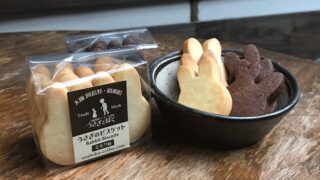
We've made a slight change to the packaging design of our drip bags.
The text that was previously placed below the logo has been changed to "With Craft & Care".
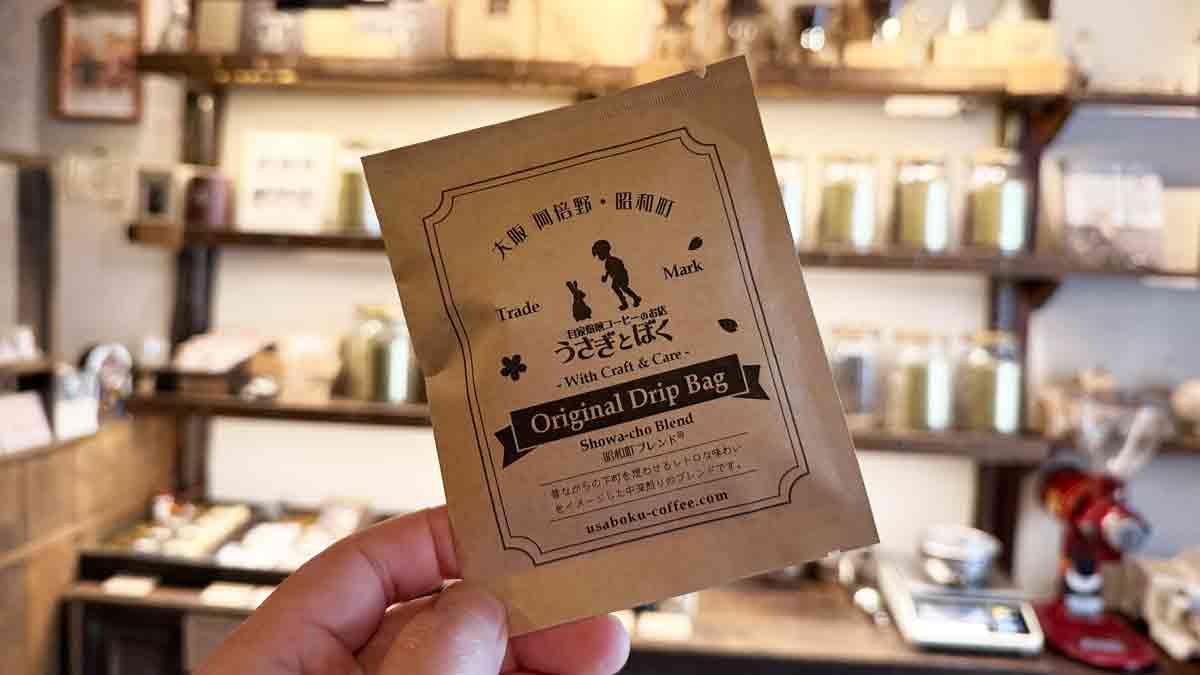
Originally, during the COVID-19 pandemic, I thought, "Let's add a message to our customers," and that's how I came up with the phrase "Have a relaxing time."
Well, I suppose that wasn't so bad.
However, if you ask me if it's a phrase that represents the store's concept, I'd say it's not quite. It's rather commonplace, and it's a phrase that could apply to other stores as well, not just ours.
Recently, in the face of the major change brought about by the arrival of the AI era, we have taken the time to re-examine what we have always valued.
While we certainly have an awareness of the need to refocus our efforts in this increasingly convenient era, we haven't really started anything new. It's more like we're realizing that these are the core principles we've always followed since opening our business.
Craft — The beauty of utility
There is a word called "Mingei" (folk craft).
This is a word I've become conscious of while creating products. Apparently, when translated into English, it becomes the word "Folk Craft."
The "beauty of utility" discovered by Soetsu Yanagi.
The beauty inherent in tools made by nameless craftsmen, tools meant to be used. Not meant for decoration, but to be held, used, and become a part of everyday life.
I feel like our coffee is somewhat similar to that.
While we certainly have things like the menu we offer in-store, latte art, and our commitment to coffee beans and roasting, ultimately, these are all "things that are consumed on an everyday basis."
It's not about the author's individuality or self-expression that comes first, but rather about being used—about being eaten and drunk.
The same applies to the products from welfare facilities that we carry in our store. We feel the unique charm of handmade products in the effort that the users put into creating them.
We deliberately don't skip steps that could be eliminated by prioritizing efficiency.
The values we cherish are subtly embodied in the products we create with such care and attention.
That's the sentiment expressed by the word "Craft."
From the outside, it might seem like a simple, even imperfect, unremarkable product. However, we believe that it embodies the righteousness and ethics that we find beautiful.
Care — "Altruism as a Consequence"
When you hear the word "altruism," the first image that comes to mind is probably "doing something for the benefit of others."
But the altruism we envision is a little gentler.
It's not the kind of proactive altruism that might seem selfish, like doing something for someone else, but rather a natural act, like a system that maintains the ecosystem.
Something that lies outside of our expectations, something with room for change, something that includes the possibility of us ourselves changing.
To give a more relatable example, even with something as simple as cooking, if you're too fixated on your own preferences, the resulting flavor can become overbearing.
Even in welfare support, if the relationship is fixed as that of supporter and recipient, it can become somewhat restrictive.
That's quite different from what we consider altruism.
What we value is altruism as a result of doing something that benefits someone or something.
It could be directed towards people, or towards cats, or towards the atmosphere of this city.
Considering this, the "hand" in "Care" might not refer to the hand we extend, but rather to the hand of the other person.
Handmade and tactile
The message "Craft & Care" is placed below the logo.
To put it in more complex terms, it's "folk art and altruism."
To put it simply, it's about "handmade craftsmanship and tactile feel."
"Mingei" (folk craft) and "ritualism" are separate words, but I feel they are saying the same thing at their core. It's about working with your hands not for yourself, but believing that your work will be used and reach others.
Handmade and tactile – I think that's a pretty good way to put it, even if I do say so myself.
Both stories are about "hands."
The hands of the creator and the hands of the recipient.
I have a feeling this will become a theme that we will cherish going forward.
I hope we can continue to deepen our understanding of "Craft & Care" as we move forward.
See you soon.